
Beat the Chill: Winter Management Tips for Pig Production
As winter tightens its grip across South Africa, pork producers are facing freezing mornings, icy winds, and prolonged cold spells that can challenge pig performance and profitability. It can be challenging to keep pigs comfortable under winter conditions. Changes in behavior and feeding patterns are often the first indicators that something is wrong. It is important to pay close attention to the pigs’ behavior, as changes in activity, eating and feed intake patterns, or vocalization can be early warning signs of diseased or distressed pigs. Maintaining optimal housing and management conditions is important to ensure animal wellbeing and farm productivity.
Housing and Environment
Often, emphasis is placed on how farmers can keep their pig herds comfortable during the extreme heat of the South African summer. However, maintaining the correct environmental temperature is equally important during the cold winter. Cold stress often goes unseen and is only observed when it starts to reach extreme levels. However, there are still some underlying “symptoms” that can affect overall pig production. When pigs are cold, energy rather gets used to produce sufficient body heat and maintain body condition. Without the proper protocols in place, pigs that are exposed to cold temperatures may require up to three times more feed to gain or maintain body weight.
Here are some ways we can help our pigs manage cold stress during the cold winter months:
1.Ventilation: Ventilation systems are designed to maintain the air quality and regulate the temperatures of the house. This is one area that is often misunderstood during the winter months. Operators often think that if ventilation is turned off, the pigs can conserve their body heat. However, when ventilation is shut off, or curtains are left closed, it allows for the build-up of harmful gases that may negatively affect the health of the pigs. In this case ventilation should rather be minimized and adjusted to prevent a draught. This will still be sufficient to provide enough oxygen for the animals and remove the build-up of moisture and harmful gases produced by the animals.
2.Maintain Thermoneutral Zones (TNZ): A thermoneutral zone or “comfort zone” can be defined as the temperature range where the animal can maintain its body temperature without using extra energy to increase or decrease their body temperature. The TNZ of pigs vary between ages. Younger pigs have a higher TNZ whereas older/adult pigs have a lower TNZ, and this is because younger pigs, especially newborn piglets, lack proper fat reserves. It is therefore important to properly manage your operation according to the TNZ of the pigs. Below is a table that indicates the approximate TNZ of pigs at different stages:
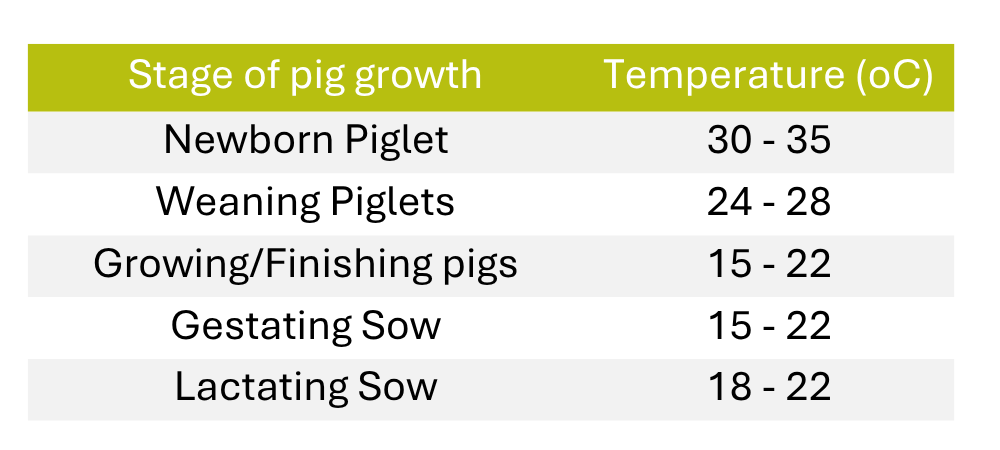
3.Heating Systems for Piglets: Heating systems such as red lamps are used to complement the ventilation to maintain a productive and comfortable environment for both the piglet and the sow.
Water Management
Water consumption is emphasized during the summer months but is equally as important in the winter. However, maintaining adequate water intake in the winter can present unique challenges. In some regions of the country, ambient temperatures drop to below freezing point, resulting in water lines and drinkers freezing. Despite these challenges, pigs must still have continuous access to clean, fresh water throughout the winter. Water plays an important role in both physiological and biological processes of the pig such as temperature regulation, nutrient uptake and growth.
Tips on water management:
1.Winter-proof your water system: It is important to plan ahead to prevent water pipes from freezing. By winter-proofing your water system(s), one can ensure sufficient water availability during the winter months. For solar powered systems, it is important to remember that solar panels stop producing energy at night. This is usually when the temperatures are the lowest and the pipes start to freeze. Farmers or farm managers should insulate their pipes and ensure that the water is continuously circulated to prevent it from freezing.
2.Double check the water flow rates:
It is important to check the water flow rates to ensure proper water intake and reduced wastage.
•Weaned piglets: 500ml per minute
•Grower/Finisher pigs: 1 – 15L per minute
•Sows: 1.5 – 2L per minute
3.Be aware of the animal’s water requirements at different stages: Water intake will vary between the different stages of pig production. It can also be affected by environmental factors, nutrition, and the health status of the animal. The following guidelines can be used when determining the water intake of the animal:
•Suckling piglets: 45ml per day at birth, increasing to 350ml per day at weaning
•Weaned piglets: 1.5 – 2.5L per day
•Grower pigs (25 – 60kg): 4 – 6L per day
•Finisher pigs (60 – 100kg): 8- 12L per day
•Gestating Sow: 10 – 15L per day•Lactating Sows: 20 – 30+L per day
Optimizing Pig Health in the Cold Weather
Maintaining and optimizing herd health should always be a top priority on a pig farm. As winter conditions settle across South Africa, producers are faced with a unique set of challenges. Cold nights, fluctuating daytime temperatures, and the tendency to close houses to retain heat can all increase the risk of health issues if not managed correctly.
While keeping pigs warm is essential, it should not come at the expense of proper ventilation. Poor air quality, excessive humidity, dust build-up, and the accumulation of harmful gases such as ammonia can place additional stress on the respiratory system and create favorable conditions for disease outbreaks. Combined with temperature fluctuations, these stressors can weaken the pigs' natural defenses, increasing their susceptibility to respiratory challenges such as Mycoplasma infections, influenza, and pneumonia.
By maintaining a balance between warmth and ventilation, monitoring environmental conditions closely, and addressing health concerns early, producers can help ensure their herds remain healthy, productive, and resilient throughout the winter months. Fortunately, there are several management practices that producers can implement to minimize these risks:
1.Biosecurity: It is important to make use of what you have. Double check your basic procedures and add a “extra layer” to the barn/house if possible. By adding more foot baths, controlling personnel and other suppliers and delivery entrance, is another way to control the spread of diseases. In addition, showers are the best way to ensure adherence to the protocols that can substantially decrease the risk of the spread of diseases.
2.Disease Surveillance and Monitoring: Implement or increase disease surveillance for high-risk pathogens in the area. This can ensure that proper mitigation strategies are put in place to prevent the spread of diseases to your herd.
Effective winter management in pig production is built on three key pillars: maintaining a stable and well-insulated housing environment, ensuring continuous access to clean and unfrozen water, and closely monitoring pig health through behavioural observation. When these elements are properly managed, pigs are better able to cope with cold stress, maintain physiological stability, and sustain performance throughout the winter period. Ultimately, attention to these fundamentals ensures both improved welfare and more consistent production outcomes during colder months